
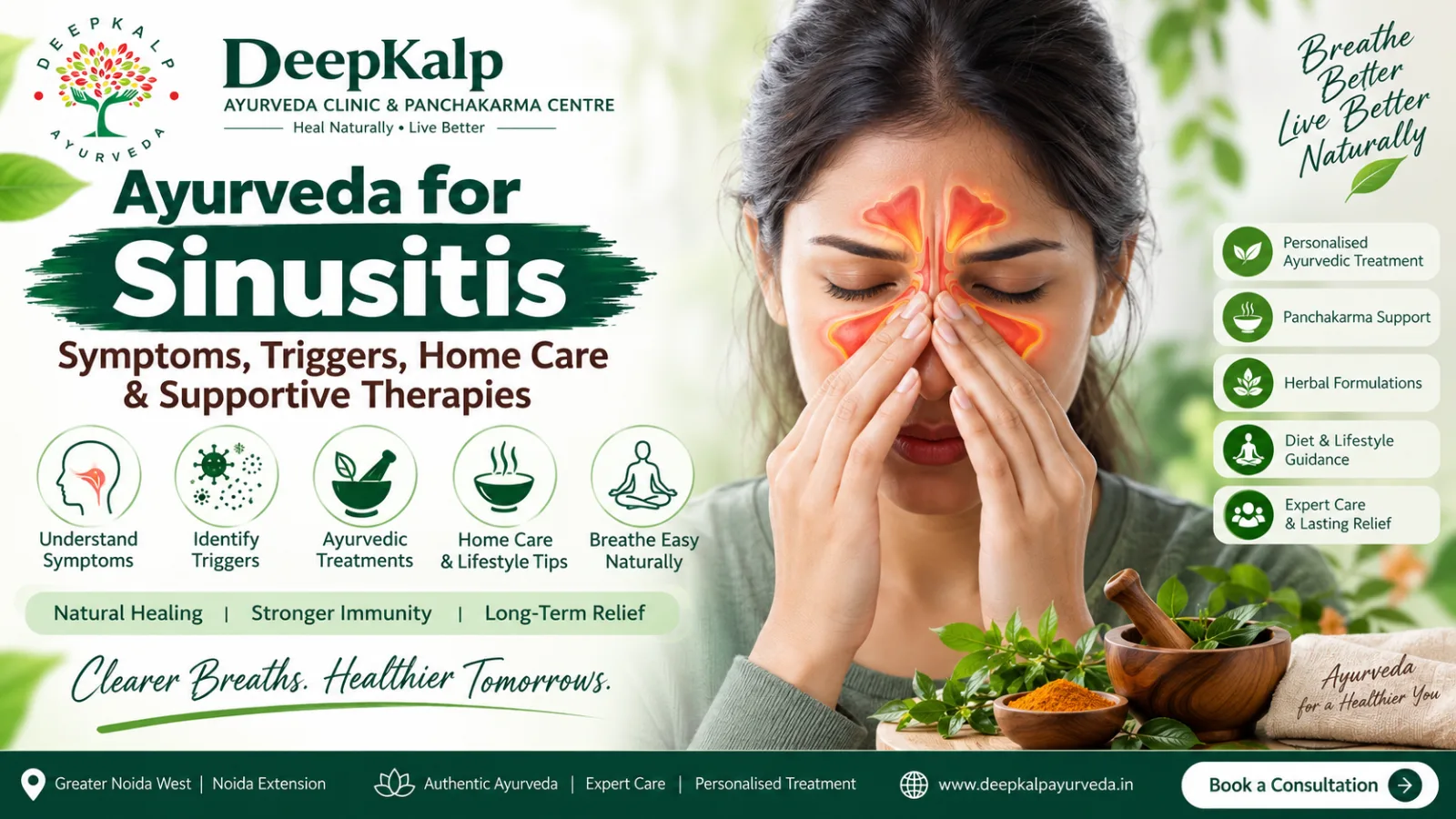
Ayurveda for Sinusitis: Quick Answer
Ayurveda may offer supportive care for people experiencing recurring sinus congestion, facial pressure or related nasal symptoms, but the right approach depends on the cause and severity. Practical measures such as hydration, adequate rest, avoiding known irritants and maintaining comfortable nasal hygiene can support general respiratory wellness. Persistent, severe or recurrent symptoms should be assessed by a qualified healthcare professional.
What Is Sinusitis?
Sinusitis is inflammation of the tissues lining the sinuses. It may occur after a viral respiratory infection and can also be associated with allergies, nasal blockage or other factors. Symptoms can include nasal congestion, thick nasal discharge, facial pressure, reduced sense of smell, headache and cough.
What Can Trigger or Worsen Sinus Symptoms?
- Viral respiratory infections
- Seasonal or environmental allergies
- Exposure to smoke, dust, strong fragrances or other irritants
- Dry or poorly ventilated environments
- Nasal structural problems in some people
How Does Ayurveda Approach Sinus and Nasal Wellness?
Ayurveda traditionally considers the individual's symptoms, constitution, digestion, routine and environmental factors when planning care. Depending on the assessment, a practitioner may recommend lifestyle measures, dietary guidance or selected traditional therapies. The aim is personalized supportive care rather than a one-size-fits-all remedy.
What Is Nasya Therapy?
Nasya is a traditional Ayurvedic procedure involving the administration of selected substances through the nasal route under professional guidance. It is not appropriate for every person or every nasal condition. A qualified practitioner should determine whether Nasya is suitable, what preparation is required and which formulation, if any, should be used.
Simple Daily Habits for Sinus Wellness
- Drink sufficient fluids according to your individual needs.
- Get adequate sleep and allow recovery during respiratory illness.
- Reduce exposure to smoke, dust and strong chemical fragrances.
- Follow sensible allergy-avoidance measures if specific triggers are known.
- Do not start nasal oils, herbal preparations or steam practices without considering your medical history and individual suitability.
When Should You Seek Medical Care?
Seek medical evaluation for severe or worsening symptoms, persistent fever, swelling around the eyes, vision changes, severe headache, confusion, neck stiffness, breathing difficulty or symptoms that repeatedly return. These features may require prompt assessment and should not be managed solely with home or traditional remedies.
Frequently Asked Questions
Can Ayurveda help with sinusitis?
Ayurvedic care may provide supportive wellness measures for selected people, depending on the cause and symptoms. It should not replace necessary medical evaluation or treatment.
Is Nasya good for sinusitis?
Nasya is a traditional Ayurvedic nasal therapy, but suitability varies. It should be performed or recommended only after professional assessment.
What should I avoid during sinus congestion?
Avoid known irritants such as smoke, dust and strong fragrances, and avoid self-prescribing nasal or herbal products without appropriate guidance.
Can sinusitis be treated naturally?
Some mild sinus symptoms may improve with supportive measures, but the cause matters. Persistent, severe or recurrent symptoms should be professionally evaluated.
Ayurvedic Sinus Care at DeepKalp Ayurveda
DeepKalp Ayurveda Clinic & Panchkarma Centre in Greater Noida West provides personalized Ayurvedic consultation and traditional therapies. A practitioner can assess your symptoms and health history before recommending an appropriate wellness plan.
Medical note: This article is for educational purposes and does not diagnose or treat an individual condition. Do not stop prescribed medicines or delay necessary medical care based on information in this article.