
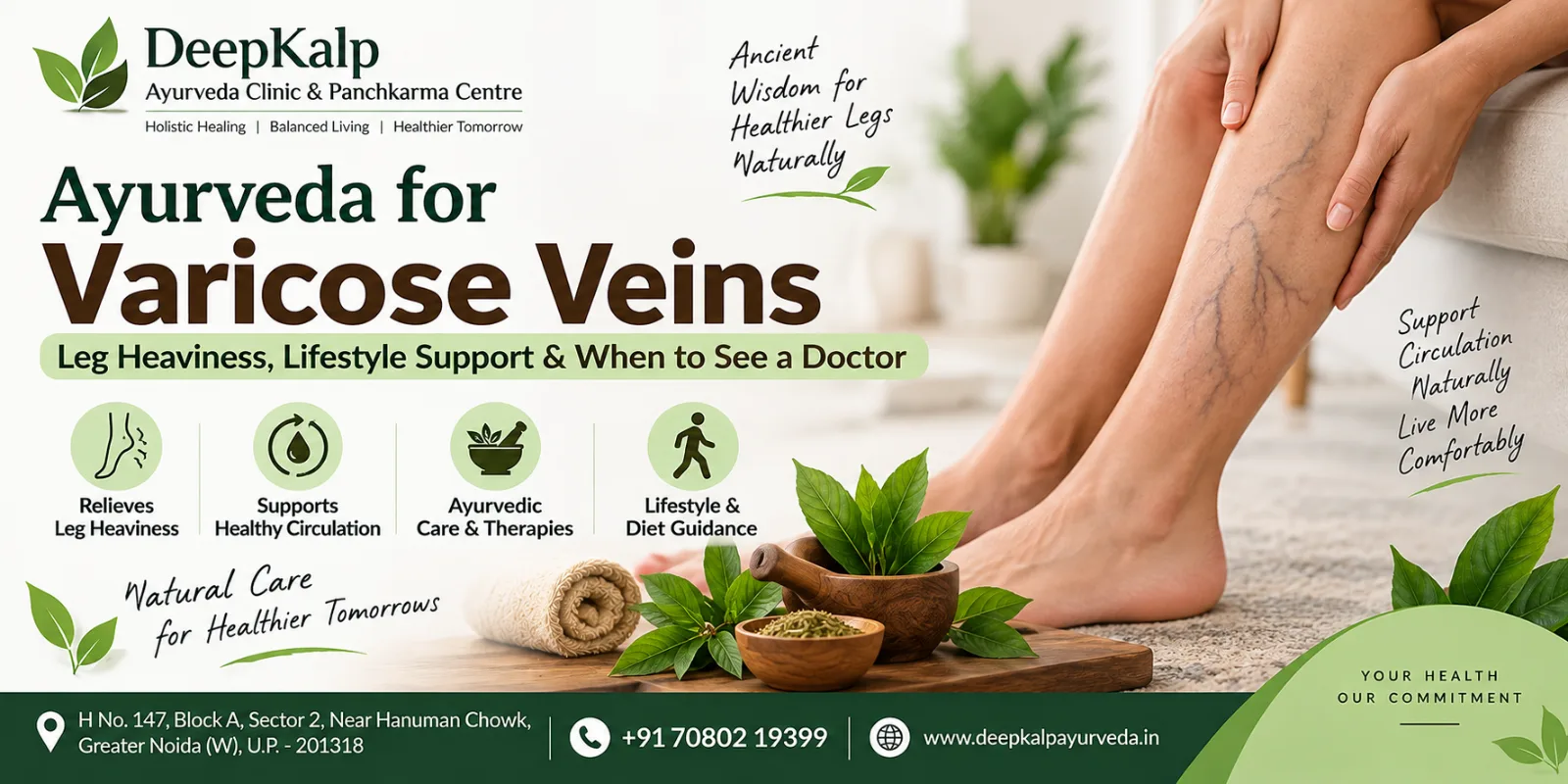
If you have visible, twisted leg veins with heaviness, aching, itching or swelling, a proper medical assessment is important before choosing treatment. Lifestyle measures such as regular movement, avoiding prolonged sitting or standing, elevating the legs and maintaining a healthy weight can help manage symptoms. Ayurveda may be considered as supportive wellness care after an appropriate assessment, but it should not replace evaluation or treatment when a vascular problem needs medical attention.
People searching for “Ayurveda for varicose veins,” “varicose veins treatment Ayurveda,” “varicose veins doctor near me,” or “Ayurvedic leg care near me” often want to know whether natural approaches can help. This guide explains what varicose veins are, what you can do safely at home, and how to approach Ayurvedic care responsibly.
What Are Varicose Veins?
Varicose veins are enlarged, twisted veins that most commonly appear in the legs. When valves inside leg veins do not work effectively, blood can pool in the veins, causing them to become enlarged and more visible. Symptoms can include an aching or heavy feeling, burning, cramping, itching and lower-leg swelling, particularly after long periods of sitting or standing. Mayo Clinic notes that weakened or damaged vein valves can contribute to this pooling of blood. citeturn0search1
Common Symptoms of Varicose Veins
- Blue, purple or prominent twisted veins
- Leg heaviness or dull aching
- Swelling around the lower legs or ankles
- Burning, throbbing or muscle cramps
- Itching around an affected vein
- Skin colour or texture changes near a longstanding vein problem
Symptoms that are worsening, persistent or associated with skin ulcers or significant swelling should be professionally assessed. citeturn0search1turn0search2
What Can Make Varicose Vein Symptoms Worse?
Long periods of standing or sitting can aggravate symptoms because movement helps support circulation in the legs. Other risk factors include increasing age, family history, pregnancy and excess body weight. Regular movement and avoiding long uninterrupted periods in one position can be useful parts of symptom management. citeturn0search1turn0search2
Ayurveda for Varicose Veins: A Supportive Approach
Ayurveda traditionally considers the person's overall constitution, daily routine, diet, activity level and symptoms when developing an individualized wellness plan. For someone with varicose veins, the focus should be on safe supportive care rather than promising that an Ayurvedic therapy will remove damaged veins.
1. Encourage Gentle, Regular Movement
Walking and other appropriate low-impact activities can help keep the calf muscles active. If your work requires prolonged sitting, take regular movement breaks. If you stand for long periods, change position and walk periodically rather than remaining stationary for hours.
2. Elevate the Legs When Resting
When comfortable, raising the legs while sitting or lying down may help reduce the feeling of heaviness and swelling. Use a comfortable position rather than forcing the legs into an uncomfortable posture.
3. Maintain a Healthy Weight
If weight management is appropriate for you, a balanced diet and sustainable physical activity can support overall cardiovascular and metabolic health. Avoid crash diets or unverified “vein-cleansing” programmes.
4. Support Skin and Foot Care
Dry or itchy skin around the legs should be protected from scratching and injury. Keep the skin moisturized when appropriate and seek assessment for persistent sores, skin breakdown or colour changes.
Can Ayurvedic Massage Be Used for Varicose Veins?
Massage should not be treated as a universal remedy for varicose veins. In particular, do not massage a leg that is suddenly swollen, painful, warm or red, or a vein that is acutely tender, until a healthcare professional has assessed the problem. Such symptoms can require evaluation for a blood clot or another vascular condition.
If massage or another Ayurvedic therapy is being considered for general leg wellness, discuss it with a qualified practitioner first and disclose your symptoms, medical history and any medicines you take. A personalized plan should prioritize safety over a fixed therapy package.
Varicose Veins Doctor Near Me: When Medical Evaluation Is Important
Searches for a “varicose veins doctor near me” are appropriate when symptoms are persistent, worsening or interfering with daily activities. A healthcare professional may assess the veins and, when indicated, arrange further testing such as a duplex ultrasound. Treatment options for symptomatic varicose veins can include compression, minimally invasive procedures or surgery depending on the individual condition. citeturn0search2turn0search0
Important Warning Signs
Do not rely on home remedies or massage if you develop sudden one-sided leg swelling, significant calf or leg pain, warmth or a new change in skin colour. These can be symptoms of a blood clot and need prompt medical assessment. If leg symptoms occur together with sudden shortness of breath, chest pain, fainting or coughing up blood, seek emergency medical care immediately. citeturn0search9
How DeepKalp Ayurveda Can Support Your Wellness Journey
For residents of Greater Noida West, Noida Extension and nearby Noida areas, DeepKalp Ayurveda Clinic & Panchkarma Centre provides personalized Ayurvedic consultation and wellness guidance. For leg-related concerns, the priority is to understand the symptoms, identify situations requiring medical evaluation and then consider appropriate supportive Ayurvedic care where suitable.
DeepKalp Ayurveda Clinic & Panchkarma Centre
H. No. 147, Block A, Sector 2,
Near Hanuman Chowk, Greater Noida West (Noida Extension),
Uttar Pradesh – 201318
Phone: +91 70802 19399
Website: www.deepkalpayurveda.in
Frequently Asked Questions
Can Ayurveda cure varicose veins?
Ayurvedic care should not be promoted as a guaranteed cure for varicose veins. It may be considered supportive wellness care, while diagnosed vascular disease should receive appropriate medical evaluation and treatment.
What is the best Ayurvedic treatment for varicose veins?
There is no single best Ayurvedic treatment for everyone. Any therapy should be selected after assessing symptoms, medical history and safety considerations.
Is walking good for varicose veins?
Regular walking can support leg movement and circulation and is commonly recommended as part of symptom management when it is medically appropriate. citeturn0search2turn0search1
Should I massage varicose veins?
Do not massage a suddenly painful, warm, red or swollen leg until it has been medically assessed. If massage is being considered for general wellness, consult a qualified practitioner first.
When should I see a doctor for varicose veins?
Seek medical advice for persistent pain, itching or swelling, worsening symptoms, skin changes, ulcers or bleeding. Sudden leg swelling or symptoms suggesting a blood clot require prompt assessment. citeturn0search2turn0search1
Medical Disclaimer
This article is for general education and does not diagnose or treat an individual condition. Ayurvedic therapies and medicines should be individualized by a qualified practitioner. Varicose veins and sudden leg symptoms can sometimes require vascular or emergency medical care; do not delay appropriate diagnosis or treatment in favour of home remedies.