
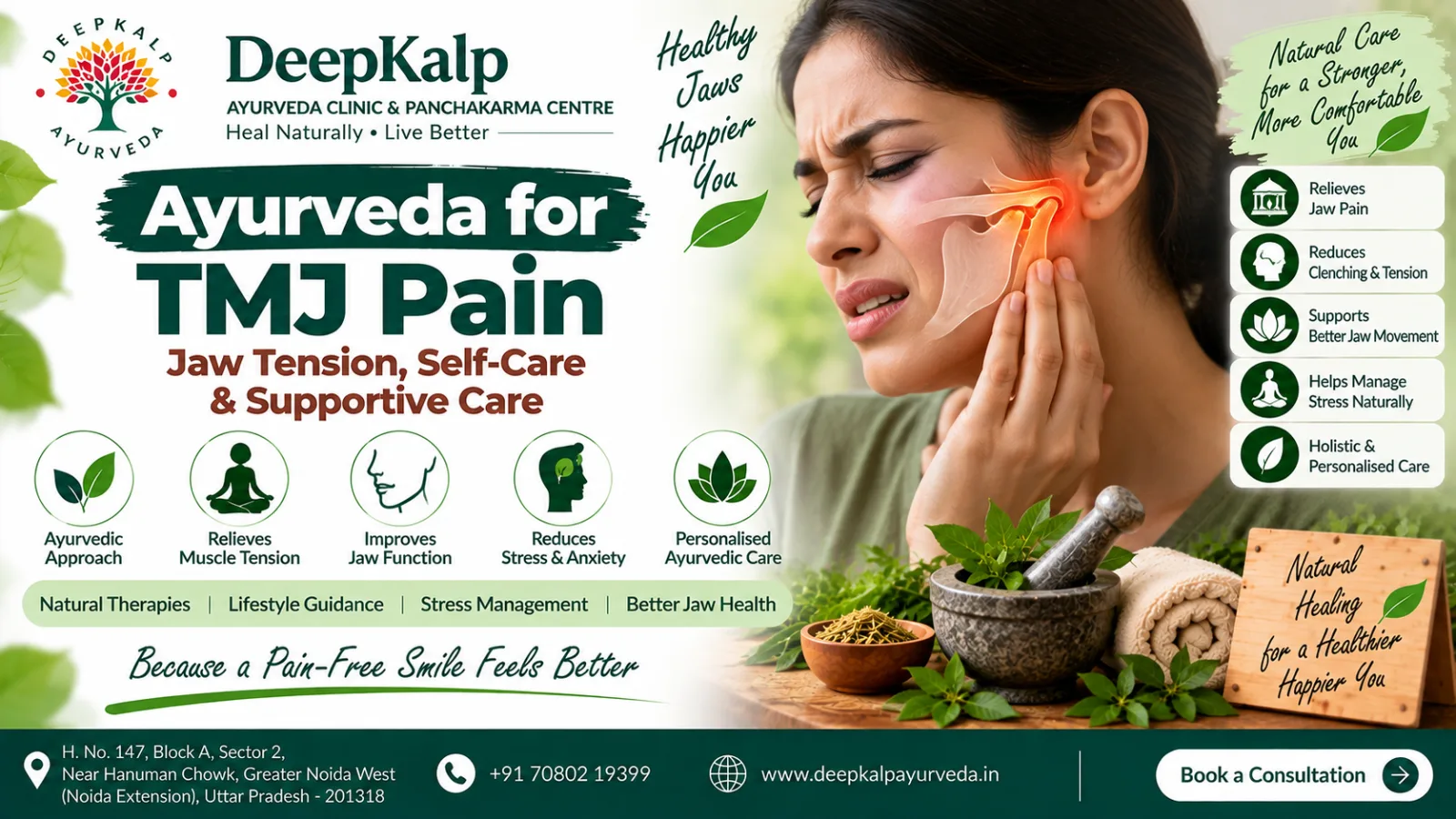
Jaw pain, stiffness or painful clicking should not simply be ignored. Temporomandibular disorders (TMD) can affect the jaw joint and the muscles used for chewing, and many mild cases improve with conservative care. Practical steps such as reducing jaw clenching, choosing softer foods temporarily, using comfortable heat or cold, and addressing stress can help some people. Ayurveda may be considered as supportive wellness care after appropriate assessment, but it should not replace a dentist or doctor when symptoms are persistent, severe, or caused by a dental or other medical problem.
What Is TMJ Pain?
The temporomandibular joints connect the lower jaw to the skull on both sides of the face. TMD is a broad term for problems involving the jaw joints, chewing muscles, or both. People may describe the problem simply as “TMJ pain,” although TMJ is the name of the joint rather than the disorder.
Common symptoms can include pain around the jaw, ear or temple, jaw stiffness, discomfort while chewing, reduced mouth opening, or painful clicking and popping. Some people also notice headaches or pain that spreads toward the face or neck.
What Can Make Jaw Tension Worse?
Jaw symptoms can have several possible contributors, and the exact cause is not always obvious. Habits and circumstances that may increase strain include:
- Frequently clenching the teeth during concentration or stress
- Grinding the teeth, especially during sleep
- Regular gum chewing or chewing very hard foods
- Biting nails, pens or other objects
- Holding the jaw tense for long periods
- Stress-related muscle tension
- A previous injury to the face or jaw
A dental assessment can be useful when tooth grinding, dental pain or changes in the way the teeth meet are suspected.
Simple TMJ Self-Care at Home
1. Give the jaw a temporary break
If chewing increases discomfort, choose softer foods for a short period and avoid foods that require prolonged or forceful chewing. This does not mean following a restrictive diet indefinitely; the goal is to reduce mechanical strain while symptoms settle.
2. Notice daytime clenching
During the day, periodically check whether the teeth are pressed together. When you are not eating, allow the jaw muscles to relax rather than deliberately holding the teeth tightly together. A simple phone reminder can help people who clench unconsciously.
3. Use comfortable heat or cold
A wrapped warm or cool pack may provide temporary comfort for some people. Use whichever feels better, protect the skin, and avoid very hot applications. If pain is severe or the area is swollen after an injury, professional assessment is more important than repeated home treatment.
4. Avoid forcing jaw exercises
Gentle movement may be appropriate for some TMD problems, but aggressive stretching or repeatedly forcing the mouth open can aggravate symptoms. If your jaw locks, movement becomes markedly restricted, or exercises increase pain, stop and seek professional advice.
Can Stress Affect Jaw Tension?
Stress does not explain every case of TMJ pain, but it can contribute to muscle tension and habits such as clenching. Creating regular relaxation periods, improving sleep habits and becoming aware of clenching can therefore be useful parts of a broader self-care plan.
Breathing exercises, quiet breaks, meditation or another personally suitable relaxation practice can be used as general stress-management tools. If anxiety, persistent sleep problems or emotional distress are significant, consider discussing them with an appropriate healthcare professional.
Ayurveda for TMJ Pain: What Is a Responsible Approach?
Ayurveda traditionally considers health in the context of the individual, including routine, diet, stress, sleep and musculoskeletal comfort. For someone seeking Ayurvedic support for jaw tension, the sensible starting point is an individualized consultation rather than assuming that one therapy or herbal product is suitable for everyone.
Depending on the person's presentation, an Ayurvedic practitioner may focus on relaxation, routine, gentle supportive measures and other appropriate wellness practices. Any external therapy around the face, neck or jaw should be selected and performed by a qualified practitioner when appropriate.
Important: There is not enough high-quality evidence to claim that Ayurveda or a specific Ayurvedic therapy cures TMD, permanently corrects the jaw joint, or replaces dental, physiotherapy or medical treatment. Avoid self-prescribing herbs or applying strong oils or preparations near the mouth or ears without professional guidance.
When Should You See a Dentist or Doctor?
Because jaw and facial pain can have causes other than TMD, professional evaluation is important when symptoms do not settle or interfere with normal activities. Consider seeing a dentist or doctor if you have persistent jaw pain, repeated painful clicking, difficulty opening your mouth, jaw locking, significant chewing difficulty, or symptoms that are getting worse.
Seek urgent medical or dental care for major facial or jaw injury, severe swelling, heavy bleeding, difficulty breathing or swallowing, or other rapidly worsening symptoms. Sudden severe headache with neurological or vision symptoms also needs urgent assessment rather than an Ayurvedic home remedy.
TMJ-Friendly Daily Habits
- Keep chewing time reasonable and avoid frequent gum chewing.
- Break long periods of concentrated work with brief relaxation pauses.
- Notice whether you clench your jaw when driving, working or using a phone.
- Maintain regular sleep and wake times where possible.
- Choose balanced meals and adequate hydration rather than relying on unverified “detox” products.
- Follow dental advice if you have suspected grinding, tooth damage or another oral-health problem.
Ayurvedic Jaw-Tension Support in Greater Noida West
If you are searching for Ayurvedic support for jaw tension in Greater Noida West or Noida Extension, DeepKalp Ayurveda Clinic & Panchkarma Centre can provide a personalized Ayurveda consultation focused on your overall routine, stress, lifestyle and musculoskeletal wellness. The purpose of an Ayurvedic consultation is to understand the individual picture and decide whether supportive Ayurvedic care is appropriate—not to replace necessary dental or medical diagnosis.
DeepKalp Ayurveda is located at H. No. 147, Block A, Sector 2, near Hanuman Chowk, Greater Noida West (Noida Extension), Uttar Pradesh 201318. Patients with persistent jaw symptoms should bring relevant dental or medical reports and current medication details to their consultation.
Frequently Asked Questions
What is the fastest way to calm TMJ pain?
For many mild cases, reducing jaw strain, avoiding clenching and hard or chewy foods, and using comfortable heat or cold may help. Persistent or severe pain should be assessed by a dentist or doctor.
Can Ayurveda help with jaw tension?
Ayurveda may be used as supportive wellness care for relaxation, routine and musculoskeletal comfort, but evidence does not establish Ayurveda as a cure for TMD. Appropriate dental or medical evaluation remains important.
Is jaw clicking always a sign of TMJ disease?
No. Clicking or popping without pain is common and does not necessarily require treatment. Painful clicking, locking or restricted movement deserves professional assessment.
Should I massage a painful jaw?
Gentle massage may help some people with muscle-related jaw discomfort, but it should not be forceful. Avoid self-massage after significant injury or when there is unexplained swelling, severe pain or restricted movement until you have been assessed.
When is TMJ pain an emergency?
Major jaw or facial injury, heavy bleeding, severe swelling with difficulty breathing or swallowing, or rapidly worsening symptoms require urgent medical or dental care.
Medical Disclaimer
This article is for general education and wellness information only. TMJ pain has multiple possible causes and this article does not diagnose or treat an individual condition. Ayurvedic care should be individualized by a qualified practitioner and used alongside, not instead of, necessary dental or medical evaluation and treatment.