
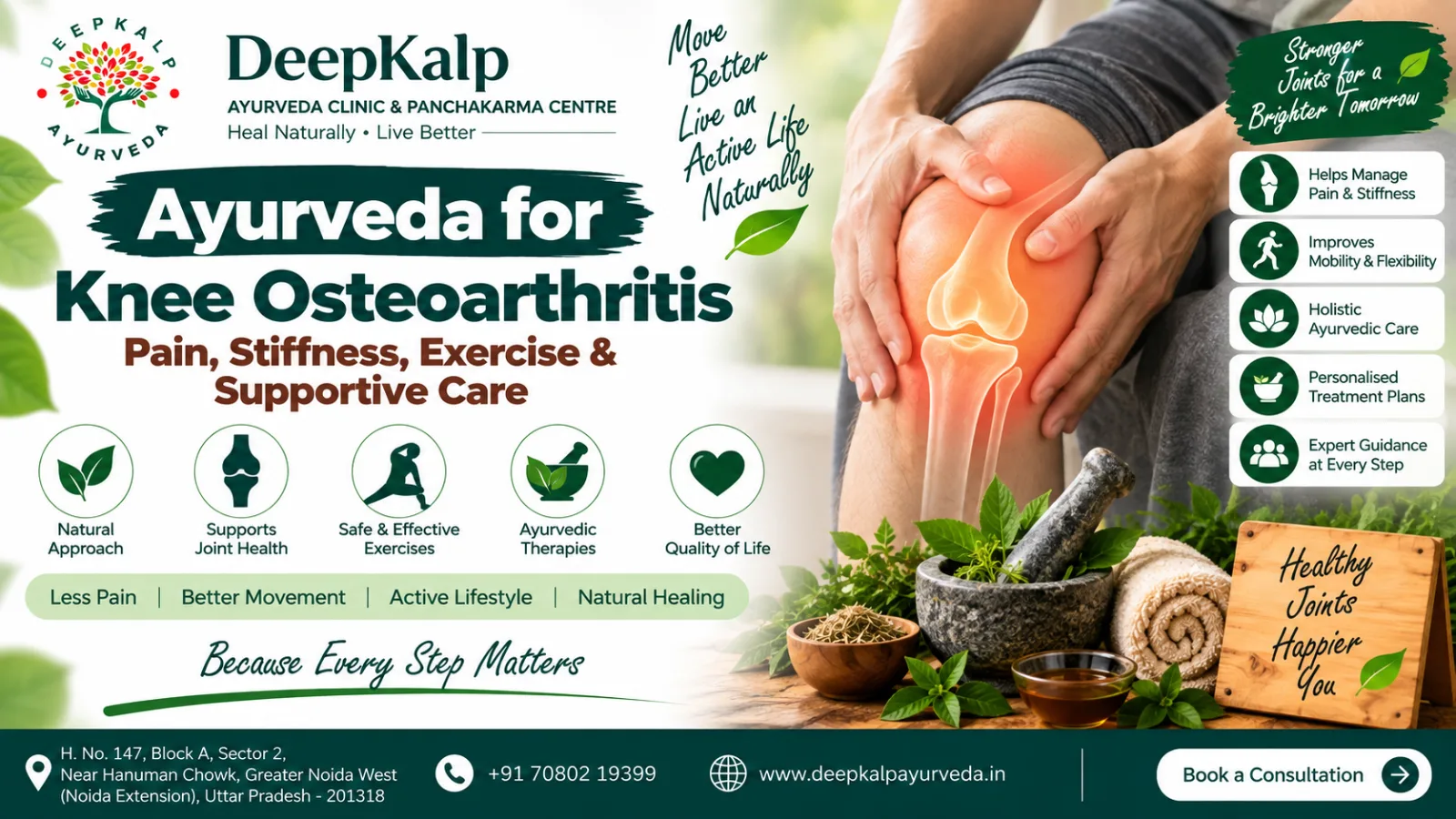
Quick Answer: Knee osteoarthritis is a common joint condition that can cause pain, stiffness and difficulty with activities such as walking, climbing stairs or getting up from a chair. Management usually works best as a long-term plan that may include appropriate exercise, strengthening, weight management when relevant, pain management and professional assessment. Ayurveda may be used as supportive, individualized care alongside appropriate medical or physiotherapy guidance rather than as a replacement for necessary treatment.
What Is Knee Osteoarthritis?
Knee osteoarthritis is a condition involving changes in the tissues of the knee joint that can lead to pain, stiffness and reduced function. Symptoms can vary from person to person and may become more noticeable after prolonged activity or periods of inactivity.
A proper clinical assessment is important because knee pain can also have other causes, including injury, inflammatory joint disease, bursitis or problems involving muscles and tendons.
Common Symptoms of Knee Osteoarthritis
- Knee pain during walking, stairs or other activities
- Stiffness after sitting or resting
- Reduced knee movement or difficulty bending and straightening
- Swelling or a feeling of fullness around the joint
- Difficulty with squatting, kneeling or getting up from a chair
- Symptoms that fluctuate with activity and individual factors
Why Movement Matters
Keeping the knee completely still for long periods can contribute to loss of strength and function. Appropriate movement and strengthening are important parts of osteoarthritis care. Exercise should be selected according to symptoms, mobility, age, fitness and any other health conditions.
Gentle Activity Ideas
- Short, comfortable walks on suitable surfaces
- Range-of-motion movements within a comfortable limit
- Strengthening exercises recommended by a qualified physiotherapist or clinician
- Low-impact activities that are appropriate for your individual condition
Avoid forcing painful movements or suddenly starting strenuous exercise. If an exercise consistently increases pain or swelling, discuss it with a healthcare professional.
Ayurvedic Perspective on Knee Wellness
Ayurvedic care traditionally considers joint discomfort in the context of the individual's symptoms, lifestyle, digestion, activity pattern and broader health. In contemporary practice, an Ayurvedic practitioner may use a personalized plan involving diet and lifestyle guidance, therapeutic procedures and other interventions where appropriate.
For a condition such as knee osteoarthritis, the aim should be supportive care focused on comfort, mobility and daily function while maintaining appropriate medical evaluation.
Ayurvedic Therapies That May Be Considered
Depending on the individual's assessment, an Ayurvedic practitioner may consider therapies traditionally used for musculoskeletal wellness, such as localized oil-based treatments, Abhyanga or Janu Basti. The choice, duration and suitability should be individualized rather than assumed from a diagnosis alone.
Evidence for individual Ayurvedic interventions varies, and research quality is not uniform. A responsible treatment plan should therefore avoid promising a cure and should integrate appropriate conventional assessment when needed.
Diet and Lifestyle Support
A balanced eating pattern, adequate protein and micronutrients, regular physical activity and healthy sleep can support general musculoskeletal health. If excess body weight is contributing to knee load, gradual weight management may also be discussed with a qualified healthcare professional.
There is no single Ayurvedic diet that is appropriate for everyone with knee osteoarthritis. Personalized dietary advice should consider age, digestion, medications, metabolic health and other individual factors.
When Should You See a Doctor or Physiotherapist?
Seek professional assessment when knee pain persists, worsens, limits normal activities or is associated with significant stiffness or swelling. Sudden severe pain, inability to bear weight, major swelling, deformity, fever, or symptoms after a significant injury require prompt medical evaluation.
Physiotherapy can be particularly useful for assessing movement, strength and exercise technique and for building an individualized rehabilitation programme.
Ayurvedic Knee Care at DeepKalp Ayurveda
At DeepKalp Ayurveda in Greater Noida West, musculoskeletal concerns can be assessed in the context of the individual's symptoms, lifestyle and overall health. Where Ayurvedic therapies are considered, the plan should be individualized and coordinated with appropriate medical or physiotherapy care when necessary.
For readers exploring related topics, see our resources on Janu Basti for Knee Pain, Ayurvedic Approach to Joint Pain & Stiffness and Panchkarma Treatment in Greater Noida West.
Frequently Asked Questions
Can Ayurveda cure knee osteoarthritis?
Knee osteoarthritis is generally managed rather than described as permanently cured. Ayurvedic care may provide supportive approaches for comfort and function, but it should not replace appropriate medical evaluation, exercise therapy or other evidence-based treatment.
Is Janu Basti suitable for everyone with knee pain?
No. Knee pain has many possible causes, and Janu Basti may not be appropriate for every person. A qualified practitioner should assess the individual before recommending a therapy.
Should I stop exercising if my knee hurts?
Not necessarily. Appropriate, gradual movement is commonly part of knee osteoarthritis management, but the type and intensity should match your symptoms and physical capacity. Avoid exercises that cause significant or persistent worsening and seek professional guidance when needed.
Can knee osteoarthritis be managed without surgery?
Many people manage symptoms with non-surgical approaches such as exercise, strengthening, activity modification, weight management when appropriate and pain-management strategies. The right plan depends on severity and individual circumstances.
Conclusion
Knee osteoarthritis can affect mobility and quality of life, but a structured approach can help people work toward better function. Regular appropriate movement, strengthening, healthy lifestyle habits and professional assessment are important foundations. Personalized Ayurvedic care may be considered as supportive care when appropriate, with necessary medical and physiotherapy treatment continuing alongside it.
Medical Disclaimer: This article is for general educational purposes and is not a diagnosis or a substitute for medical advice. Ayurvedic therapies and medicines should be recommended by a qualified practitioner after individual assessment. Seek timely medical care for severe, sudden or worsening symptoms.