
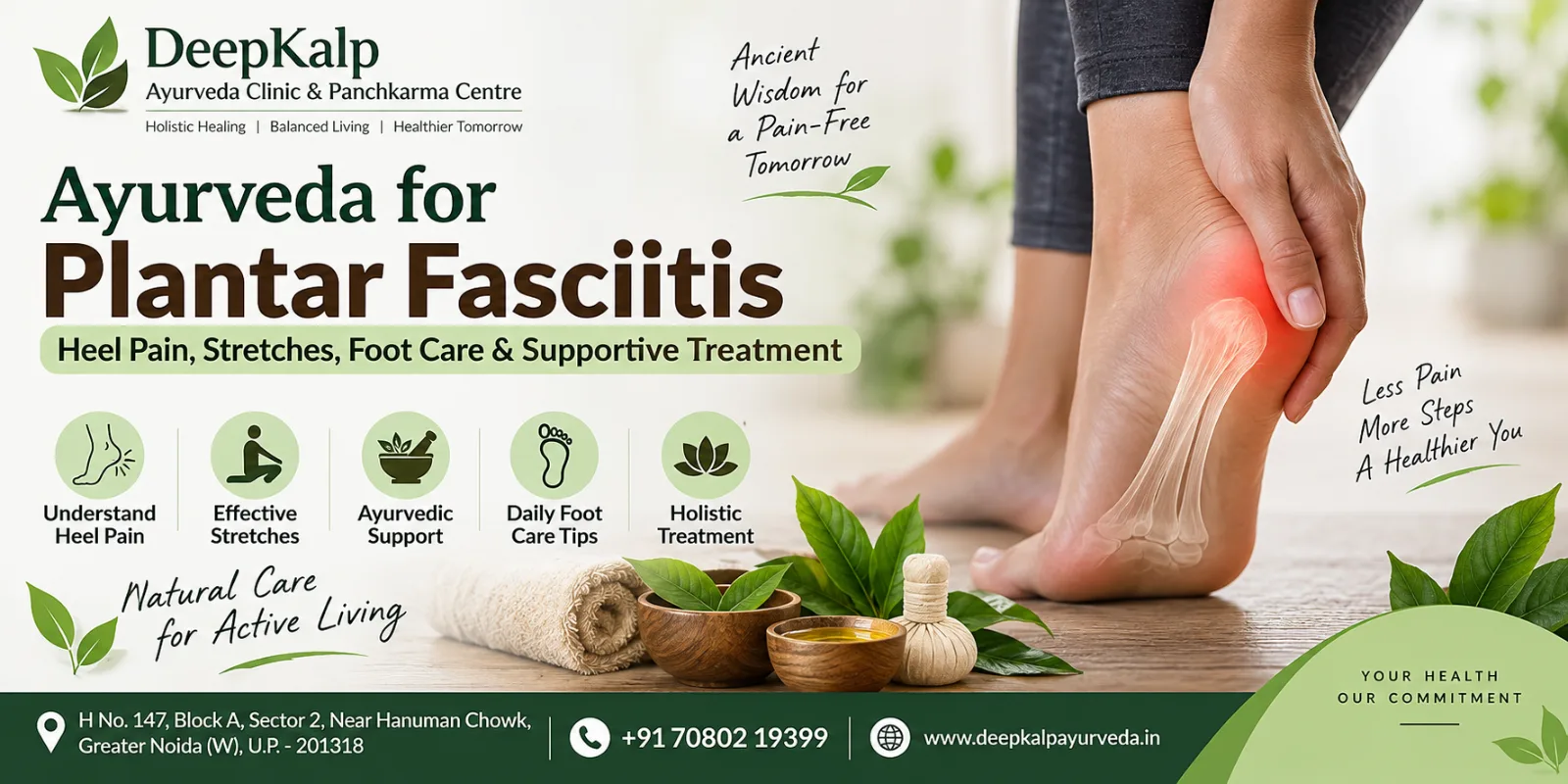
Plantar fasciitis is a common cause of pain around the heel and underside of the foot. If your heel hurts when you take your first steps after waking or after sitting for a while, practical measures such as activity modification, supportive footwear and gentle stretching may help. At DeepKalp Ayurveda in Greater Noida West, an Ayurvedic consultation can be used to understand your symptoms and provide individualized supportive care without delaying appropriate medical evaluation.
This guide is useful if you are searching for Ayurveda for plantar fasciitis, heel pain treatment in Greater Noida, Ayurvedic treatment for heel pain, or plantar fasciitis treatment near me.
What Is Plantar Fasciitis?
The plantar fascia is a strong band of tissue running along the underside of the foot and helping support the arch. Plantar fasciitis refers to pain involving this structure, commonly near its attachment at the heel. Symptoms often become noticeable after rest and may worsen with prolonged standing, walking or running.
What Does Plantar Fasciitis Feel Like?
- Pain under the heel or along the arch of the foot
- Marked discomfort with the first few steps after waking
- Pain after getting up following prolonged sitting
- Symptoms that increase after long periods of standing, walking or running
- Tightness in the calf or underside of the foot
Heel pain can have several causes, so persistent symptoms should not automatically be labelled as plantar fasciitis without appropriate assessment.
Why Does Heel Pain Happen?
Plantar fascia pain can be associated with increased or changed activity, prolonged standing, running, tight calf muscles, reduced ankle movement, unsupportive footwear and increased body weight. Starting a new exercise routine suddenly or increasing walking and running too quickly may also increase strain on the foot.
Simple Foot-Care Measures for Plantar Fasciitis
Choose Supportive Footwear
Use comfortable shoes with adequate cushioning and arch support. Avoid spending long periods barefoot on hard floors or relying on very flat, unsupportive footwear when it aggravates your symptoms.
Modify Activities Instead of Complete Inactivity
Temporarily reduce activities that clearly increase heel pain, particularly prolonged standing, running or high-impact exercise. Low-impact activities may be useful for maintaining movement when they do not worsen symptoms.
Use Gentle Stretching
Gentle calf and plantar-fascia stretches are commonly recommended for plantar heel pain. Stretch slowly and avoid forcing the foot into painful positions. If an exercise significantly increases your symptoms, stop and seek guidance from a qualified healthcare professional.
Give Your Feet Recovery Time
Break up long periods of standing and allow adequate recovery between demanding activities. Gradually return to exercise rather than suddenly returning to your previous workload.
How Ayurveda May Support Plantar Fasciitis Wellness
Ayurveda traditionally emphasizes individualized assessment rather than using one identical treatment for everyone. For a person with heel and foot discomfort, an Ayurvedic practitioner may consider symptoms, activity level, daily routine, diet, sleep, body constitution and other relevant factors before recommending supportive measures.
Depending on the individual assessment, Ayurvedic care may include suitable local therapies, gentle oil-based approaches, movement and lifestyle guidance, or other traditional therapies. These should be selected and performed appropriately rather than self-administered based only on an online article.
Important: Ayurvedic supportive care should complement, not replace, necessary diagnosis, physiotherapy, podiatry or other medical care when indicated.
Who May Need Extra Caution?
People with diabetes, reduced sensation in the feet, poor circulation, significant swelling, recent injury, open wounds or unexplained severe foot pain should obtain appropriate medical advice before using home treatments, intense massage, heat or ice. Foot problems can require particular care in people with diabetes.
When Should You See a Doctor for Heel Pain?
Seek professional assessment if pain is severe, keeps returning, interferes with normal activities, is getting worse, does not improve with sensible self-care, or is accompanied by numbness, tingling, significant swelling, fever or an injury. Sudden inability to bear weight or suspected fracture requires prompt medical attention.
Plantar Fasciitis Care in Greater Noida West & Noida Extension
If you are looking for plantar fasciitis treatment near me or an Ayurvedic doctor for heel pain in Greater Noida, DeepKalp Ayurveda Clinic & Panchkarma Centre in Greater Noida West provides personalized Ayurvedic consultation. The goal is to understand your symptoms, consider your daily routine and activity demands, and discuss appropriate supportive care or referral when necessary.
DeepKalp Ayurveda Clinic & Panchkarma Centre
H. No. 147, Block A, Sector 2,
Near Hanuman Chowk, Greater Noida West (Noida Extension),
Uttar Pradesh – 201318
Phone: +91 70802 19399
Website: www.deepkalpayurveda.in
Frequently Asked Questions
What is the best Ayurvedic treatment for plantar fasciitis?
There is no single Ayurvedic treatment that is best for everyone. A qualified practitioner should assess the cause and severity of heel pain before recommending individualized supportive care.
How can I reduce plantar fasciitis pain at home?
Common supportive measures include reducing aggravating activities, wearing supportive footwear and performing gentle foot and calf stretches that do not significantly worsen symptoms.
Why does my heel hurt when I take my first steps in the morning?
Morning first-step heel pain is a common feature of plantar fasciitis, although other causes of heel pain are possible and persistent symptoms should be assessed.
Can Ayurvedic massage help heel pain?
Massage or other Ayurvedic local therapies may be considered as supportive care for some people, but the appropriate approach depends on the individual diagnosis and should be guided by a qualified practitioner.
Where can I consult for plantar fasciitis in Greater Noida West?
You can consult DeepKalp Ayurveda Clinic & Panchkarma Centre in Sector 2, Greater Noida West, near Hanuman Chowk, for personalized Ayurvedic guidance regarding heel and foot discomfort.
Medical Disclaimer
This article is for educational purposes only and is not a diagnosis or substitute for personal medical care. Heel pain can have different causes. Do not delay medical evaluation for severe, persistent, worsening or unusual symptoms, and do not start medicines or procedures without appropriate professional advice.