
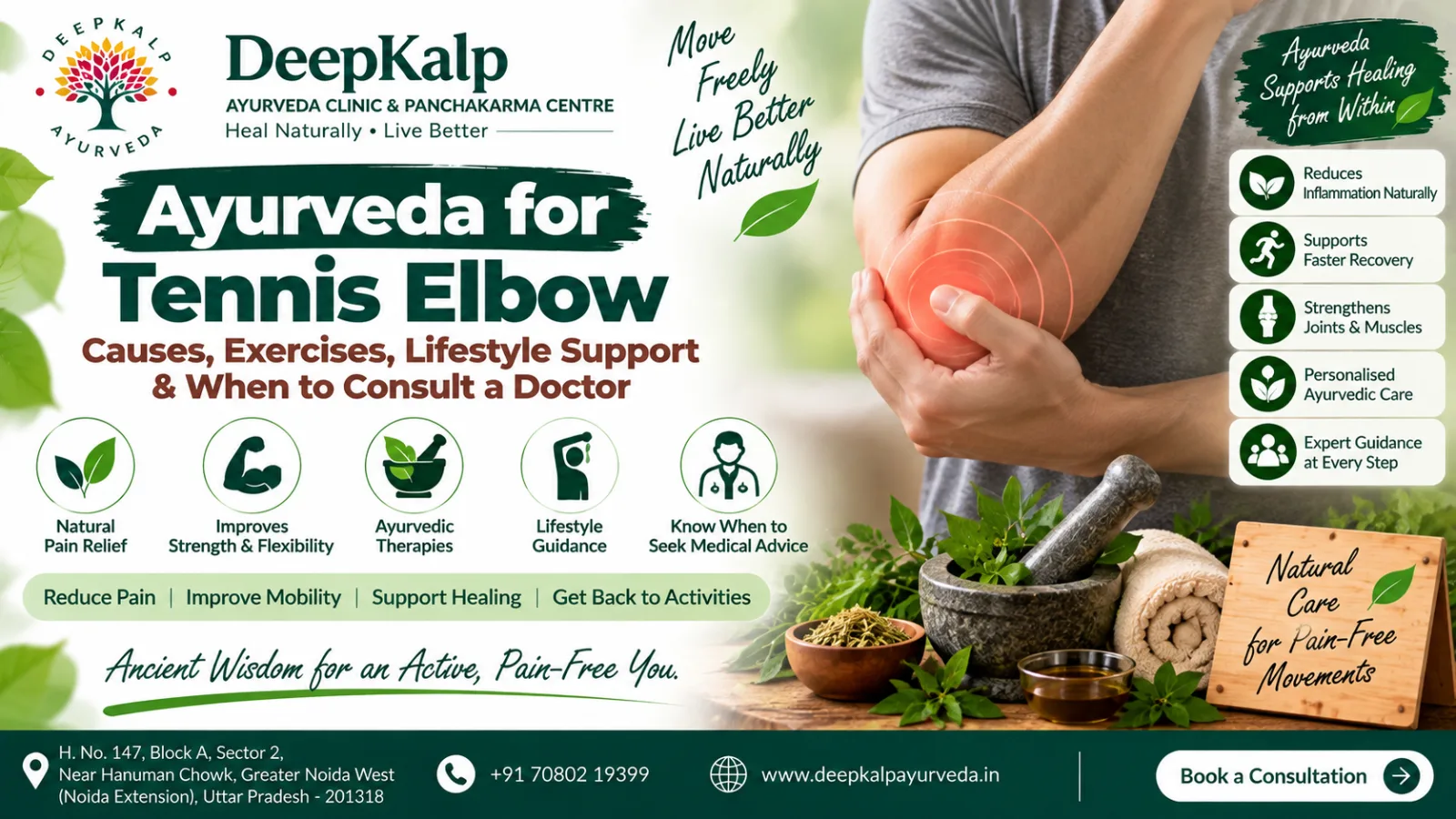
Looking for Ayurvedic treatment for tennis elbow or elbow pain near you? Tennis elbow commonly causes pain around the outside of the elbow and may become more noticeable with gripping, lifting, wrist movement or repetitive forearm activity. A sensible approach begins with identifying aggravating activities, maintaining comfortable movement and getting an appropriate assessment when symptoms persist; personalized Ayurvedic care may be considered as supportive care alongside appropriate medical evaluation.
What Is Tennis Elbow?
Tennis elbow, also called lateral elbow tendinopathy, is a common overuse-related problem involving the tendons around the outer elbow. Despite its name, you do not have to play tennis to develop it. Repeated gripping, lifting, twisting, keyboard or mouse work, manual tasks and other repetitive wrist-and-forearm movements can contribute to symptoms.
Common Tennis Elbow Symptoms
- Pain or tenderness on the outside of the elbow
- Pain that increases while gripping or lifting
- Forearm discomfort associated with wrist movement
- Difficulty with activities such as opening jars or carrying objects
- Stiffness or reduced comfortable movement of the elbow
Symptoms can vary from mild discomfort to persistent pain that affects everyday activities. Persistent elbow pain should not be self-diagnosed because other tendon, joint, nerve or injury-related conditions can cause similar symptoms.
Why Does Tennis Elbow Happen?
The problem is often associated with repeated loading of the muscles and tendons that control the wrist and forearm. A sudden increase in exercise, repetitive household work, prolonged computer use, manual work or frequent gripping may place more demand on these tissues than they can comfortably tolerate.
Ayurvedic Perspective on Tennis Elbow Support
Ayurveda traditionally looks at musculoskeletal complaints in relation to the individual's symptoms, activity pattern, digestion, sleep, diet, daily routine and overall constitution. At DeepKalp Ayurveda, the aim of a consultation is to understand the person's presentation rather than prescribe one identical therapy for everyone.
Depending on the assessment, an Ayurvedic practitioner may consider supportive measures such as appropriate local therapies, oil-based therapies, gentle movement advice, diet and routine guidance. The exact therapy, oil, duration and frequency should be individualized rather than selected solely from an online article.
Exercises and Movement: A Key Part of Recovery
For many people with tennis elbow, gradual movement and progressive strengthening are important parts of rehabilitation. Gentle elbow and wrist movements can help maintain mobility, while strengthening is usually introduced progressively according to symptoms and functional ability.
Simple Movement Principles
- Reduce or modify activities that clearly increase elbow pain.
- Avoid prolonged complete immobilization unless advised by a clinician.
- Begin comfortable range-of-motion movements and progress gradually.
- Do not force an exercise through sharp or significantly worsening pain.
- For persistent symptoms, consider assessment by an appropriate healthcare professional or physiotherapist.
Evidence-based patient guidance also emphasizes activity modification and gradual exercise rather than prolonged inactivity. citeturn0search0turn0search2
Daily Habits That May Reduce Elbow Strain
- Take regular breaks during repetitive computer or desk work.
- Review mouse and keyboard positioning if they trigger symptoms.
- Use a comfortable grip and avoid unnecessary force when carrying objects.
- Modify repetitive lifting, twisting or gripping tasks temporarily.
- Return to heavier activity gradually as comfort and strength improve.
These principles are consistent with current patient guidance for tennis elbow, which recommends reducing aggravating activities while gradually returning to normal movement. citeturn0search0turn0search9
Who May Consider an Ayurvedic Consultation for Tennis Elbow?
An Ayurvedic consultation may be useful for people who have recurring elbow discomfort and want a personalized wellness plan that considers their daily routine, work, physical activity and overall health. It can also help clarify whether an Ayurvedic supportive approach is appropriate or whether another type of medical assessment is needed first.
When Should You See a Doctor?
Do not assume every elbow pain is tennis elbow. Seek professional assessment if pain persists despite reasonable self-care, interferes with normal activities, follows significant trauma, or is associated with marked swelling, weakness, numbness or tingling. Severe pain with major difficulty moving the arm also warrants prompt medical attention. citeturn0search1turn0search11
Why Choose DeepKalp Ayurveda in Greater Noida West?
If you are searching for Ayurvedic treatment for tennis elbow near me, an Ayurvedic doctor for elbow pain in Greater Noida West, or an Ayurvedic clinic in Noida Extension, DeepKalp Ayurveda offers personalized Ayurvedic consultation and supportive wellness care.
At DeepKalp, treatment planning can take into account the nature of the symptoms, daily activities, previous treatment, movement pattern, diet and lifestyle. The objective is to provide an individualized plan rather than make a one-size-fits-all promise.
DeepKalp Ayurveda Clinic & Panchkarma Centre
H. No. 147, Block A, Sector 2,
Near Hanuman Chowk, Greater Noida West (Noida Extension),
Uttar Pradesh – 201318
Phone: +91 70802 19399
Website: www.deepkalpayurveda.in
Frequently Asked Questions
What is the best Ayurvedic treatment for tennis elbow?
There is no single treatment that is best for everyone. A qualified practitioner should assess the symptoms and activity pattern before recommending personalized Ayurvedic supportive care.
Can Ayurveda help with tennis elbow?
Ayurvedic care may be used as supportive management for musculoskeletal wellness, including individualized local therapies, routine guidance and movement advice. It should complement appropriate diagnosis and rehabilitation when required.
Can computer work cause tennis elbow?
Repetitive computer work, especially prolonged mouse use and repetitive wrist or forearm movements, can aggravate or contribute to tennis-elbow symptoms in some people.
Should I completely rest my arm if I have tennis elbow?
Usually, prolonged complete inactivity is not the goal. Reducing aggravating activities while maintaining comfortable movement and gradually rebuilding strength is generally recommended.
When should I consult a doctor for elbow pain?
Consult a healthcare professional if the pain persists, affects daily activities, follows significant injury, or is accompanied by substantial swelling, weakness, numbness or tingling.
Important Precautions
- Do not diagnose tennis elbow solely from online symptoms.
- Do not force stretching, massage or strengthening exercises when they significantly worsen pain.
- Do not apply very hot oils, heat or other local therapies to injured or numb skin without professional guidance.
- Tell your practitioner about existing medical conditions, medicines and previous injuries before starting any therapy.
- Seek timely conventional medical care when symptoms suggest significant injury, infection, nerve involvement or another condition requiring investigation.
Medical Disclaimer
This article is for educational purposes only and does not replace an examination or individualized medical advice. Ayurvedic treatment should be personalized by a qualified practitioner and should not delay necessary diagnosis, physiotherapy, specialist care or emergency treatment. Do not start, stop or change medicines or therapeutic procedures based only on this article.