
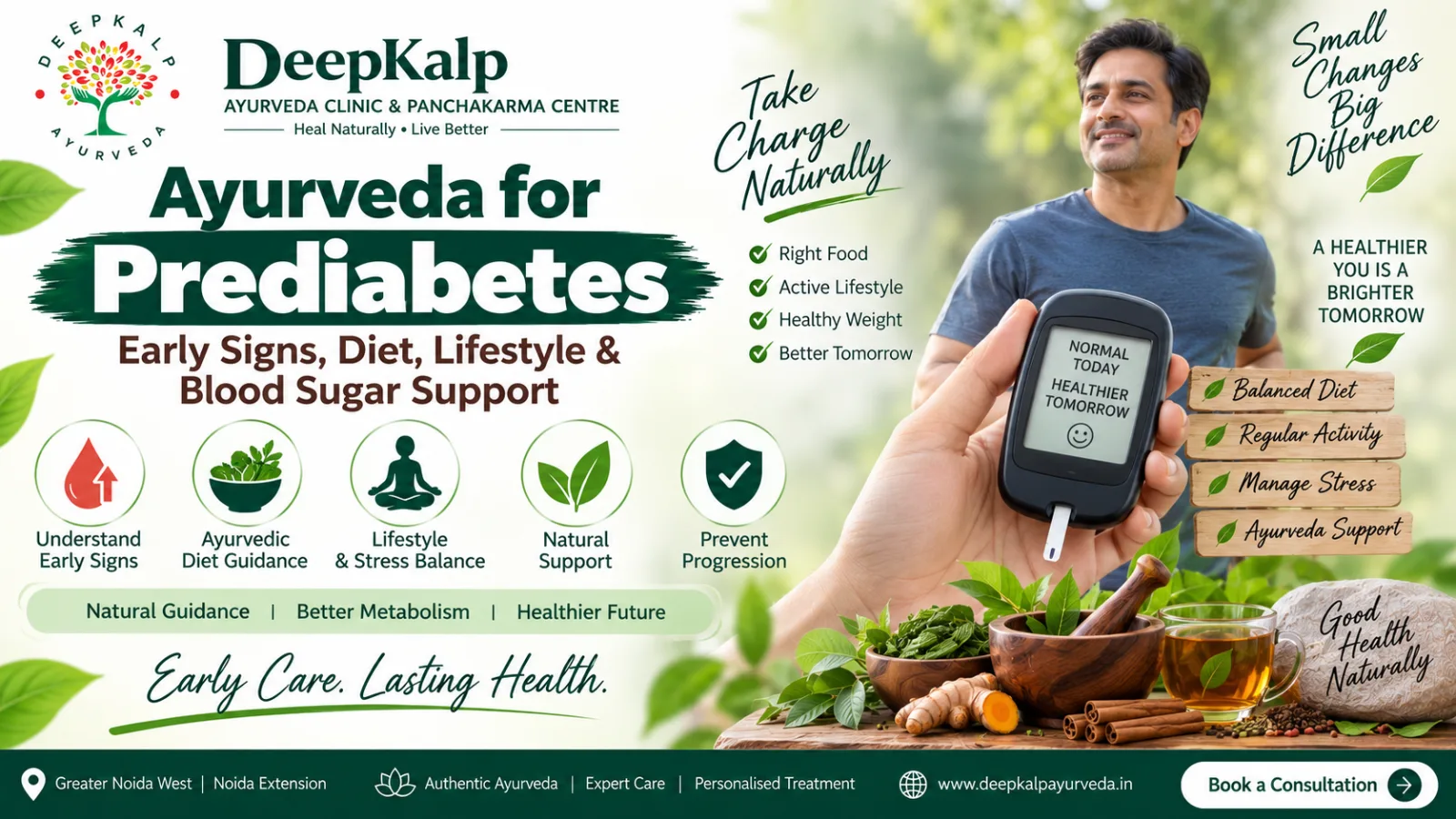
Can Ayurveda help with prediabetes? Ayurveda may support people with prediabetes through individualized food choices, daily routine, physical activity, stress management, sleep and selected supportive therapies. Prediabetes means blood glucose is higher than the normal range but not yet in the diabetes range. It is important to take it seriously because lifestyle changes and appropriate medical follow-up can reduce the risk of progression.
This article explains practical, low-risk habits and where personalized Ayurvedic guidance may fit. Ayurveda should complement—not replace—blood-glucose testing, medical assessment or prescribed treatment.
What Is Prediabetes?
Prediabetes is a metabolic state in which blood sugar is above the healthy range but below the diagnostic threshold for diabetes. It is commonly associated with insulin resistance and may occur without obvious symptoms. A clinician may use tests such as fasting blood glucose, HbA1c or an oral glucose tolerance test to assess blood-sugar status.
What Are the Early Signs of Prediabetes?
Prediabetes often has no clear symptoms. Some people may notice increased thirst, frequent urination, tiredness or changes in weight, but these symptoms can have many causes and should not be used to diagnose prediabetes on their own.
Who May Need Extra Attention?
- People with a family history of type 2 diabetes
- People carrying excess abdominal or overall body weight
- People with low physical activity
- People with previously abnormal blood-sugar results
- People with a history of gestational diabetes or certain metabolic conditions
Ayurvedic Approach to Prediabetes Support
Ayurvedic care generally emphasizes individualized diet, digestion, daily routine, movement, sleep and stress management rather than a single remedy for everyone. A practitioner may consider the person's constitution, symptoms, food habits, activity, sleep and existing health conditions before recommending a plan.
Prediabetes Diet: Practical Food Habits
A sustainable eating pattern is more useful than an extreme “sugar-free” or crash diet. The aim is to build balanced meals, moderate portions and consistent eating habits.
Choose More Often
- Non-starchy vegetables such as leafy greens, gourds, beans, cauliflower and other seasonal vegetables
- Whole or minimally processed grains in suitable portions, such as whole wheat, oats or millets when individually tolerated
- Protein sources such as dal, beans, chickpeas, paneer or unsweetened curd as appropriate
- Whole fruits in sensible portions rather than fruit juice
- Nuts and seeds in modest portions
- Water and unsweetened beverages
Limit More Often
- Sugary drinks, packaged juices and sweetened tea or coffee
- Sweets, desserts and frequent refined-flour snacks
- Highly processed snack foods
- Very large portions of rice, roti or other concentrated carbohydrate foods
- Frequent late-night eating
Portion size matters even for nutritious foods. A simple plate approach—vegetables, a protein source and a measured portion of whole-food carbohydrate—can make meals easier to manage.
Daily Routine and Physical Activity
Regular movement can be an important part of blood-sugar wellness. Depending on fitness and medical status, practical options include brisk walking, cycling, strength exercises, yoga or other enjoyable activities. Breaking up long periods of sitting with short movement breaks can also be useful.
Consistency is more important than starting with an intense routine. Anyone with significant health limitations should discuss an appropriate activity plan with a qualified professional.
Sleep and Stress Management
Irregular sleep and persistent stress can make healthy routines harder to maintain. Ayurveda-inspired daily-routine practices may include a consistent sleep schedule, calmer evening habits, breathing or relaxation practices, mindful meals and reducing unnecessary screen stimulation before bed.
Ayurvedic Herbs and Home Remedies: Use Caution
Some Ayurvedic traditions use ingredients such as fenugreek, bitter gourd, jamun or other herbs in metabolic-health routines. However, “natural” does not automatically mean safe or suitable for every person. Some herbs or supplements may affect blood glucose or interact with diabetes medicines.
Do not start concentrated herbal preparations or stop prescribed medicines based only on online advice. Discuss any herb or supplement with a qualified healthcare professional, especially if you already take glucose-lowering medicines.
Can Panchkarma Be Used for Prediabetes?
Panchkarma is not a universal treatment for prediabetes, and it should not be promoted as a substitute for evidence-based diabetes prevention or treatment. If an Ayurvedic practitioner considers a traditional therapy appropriate, it should follow an individual assessment, with attention to current health, medicines, hydration, nutrition and other safety factors.
For background, see our complete guide to Panchkarma and Panchkarma precautions.
Prediabetes: A Simple Daily Checklist
- Choose balanced meals and sensible portions.
- Prefer whole fruit over juice.
- Move regularly and avoid prolonged sitting.
- Keep a consistent sleep routine.
- Manage stress with practical relaxation habits.
- Track recommended blood-glucose or HbA1c tests.
- Attend medical follow-ups when advised.
- Review herbs and supplements with a professional before using them.
When Should You See a Doctor?
Seek medical evaluation if blood-sugar tests are repeatedly abnormal, symptoms such as excessive thirst or frequent urination develop, or you have risk factors for diabetes. If you already have diabetes or take glucose-lowering medicines, changes in diet, exercise or supplements should be discussed with your treating clinician.
Prediabetes Support in Greater Noida West & Noida Extension
If you are looking for Ayurvedic wellness guidance in Greater Noida West or Noida Extension, DeepKalp Ayurveda can provide a personalized Ayurvedic consultation focused on diet, daily routine, lifestyle and appropriate supportive care. A consultation should work alongside—not instead of—necessary medical testing and treatment.
You can also explore our Ayurveda for Diabetes article for general blood-sugar wellness information and our guide to the first Ayurvedic consultation.
Frequently Asked Questions
Can prediabetes be reversed?
Prediabetes can often improve substantially with sustained lifestyle changes, and some people return to a normal blood-glucose range. Individual outcomes vary, so regular testing and professional guidance remain important.
What should I eat if I have prediabetes?
Favor vegetables, adequate protein, whole or minimally processed foods, whole fruit in appropriate portions and high-fiber choices, while limiting sugary drinks, sweets and highly refined foods. Portion size and overall eating pattern matter.
Is Ayurveda a replacement for diabetes medicine?
No. Ayurveda should not replace prescribed diabetes treatment, glucose monitoring or medical follow-up. Any complementary Ayurvedic approach should be coordinated with appropriate healthcare.
Are Ayurvedic herbs safe for prediabetes?
Not automatically. Some herbs can affect blood glucose or interact with medicines. Use them only after discussing the specific product, dose and your health conditions with a qualified professional.
Does prediabetes always cause symptoms?
No. Prediabetes frequently has no obvious symptoms, which is why appropriate blood-glucose testing is important for people at risk.
Medical Disclaimer
This educational article is for general wellness information and is not a diagnosis or individualized medical prescription. Prediabetes and diabetes require appropriate clinical assessment and monitoring. Do not stop, reduce or change prescribed medicines because of this article. Consult a qualified medical professional and an appropriately trained Ayurvedic practitioner before starting herbs, supplements or therapies, particularly if you have an existing condition or take medication.