
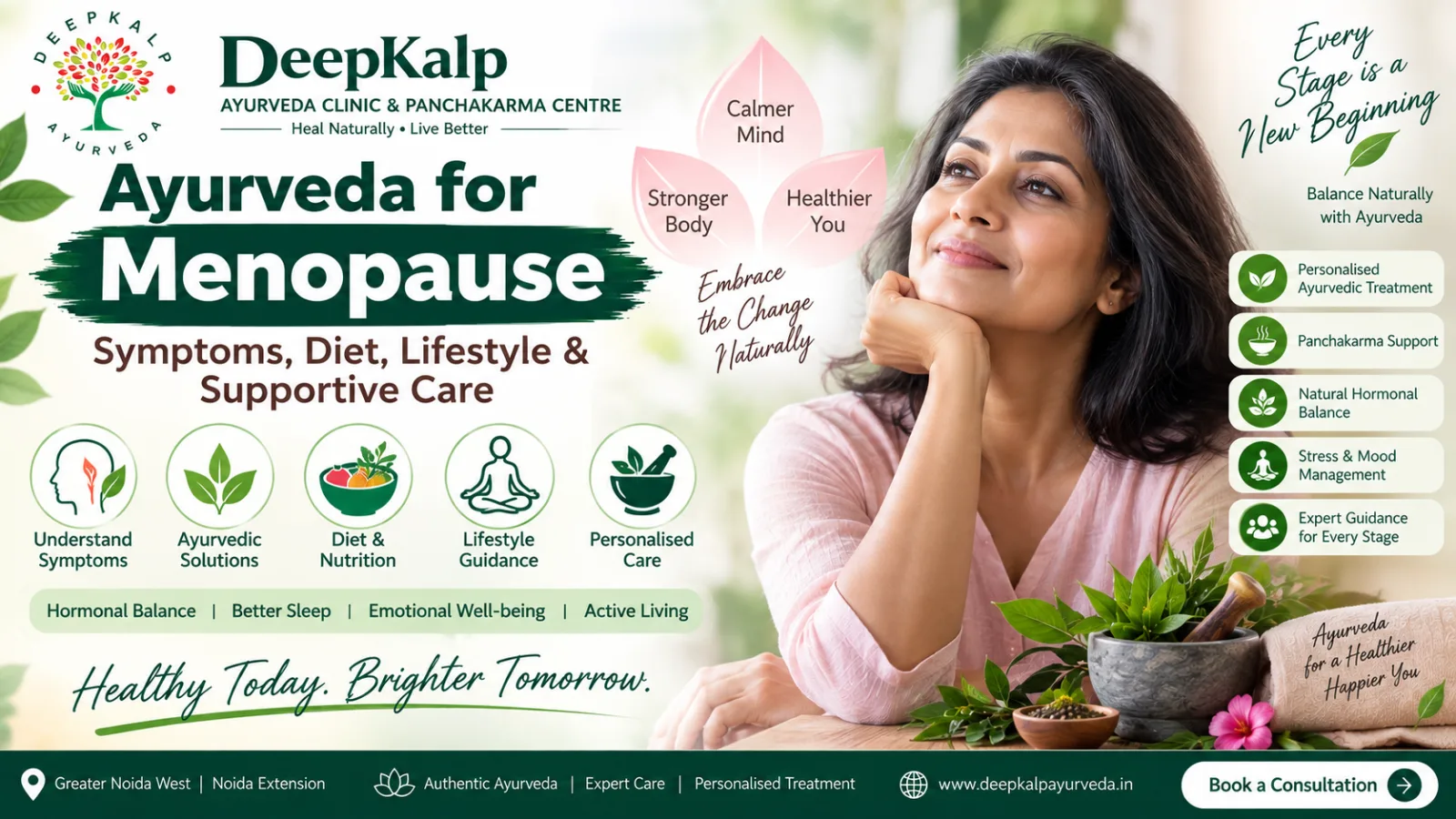
Ayurveda for Menopause: Quick Answer
Menopause is a natural stage of life, but symptoms such as hot flashes, sleep disturbance, mood changes, vaginal dryness and changes in energy can affect quality of life. Ayurveda may be used as a complementary wellness approach through individualized diet, daily routine, stress-management practices and practitioner-selected therapies. Because symptoms can have different causes, professional medical assessment is important when symptoms are new, severe or unusual.
What Happens During Menopause?
Menopause marks the end of menstrual periods after the ovaries gradually reduce reproductive hormone production. The transition, called perimenopause, can last for several years. Symptoms vary considerably from one woman to another.
Common Menopause Symptoms
- Hot flashes or night sweats
- Changes in sleep quality
- Mood changes or increased stress
- Irregular periods during the transition
- Vaginal dryness or discomfort
- Changes in energy, concentration or overall wellbeing
How Can Ayurveda Support Menopause Wellness?
Ayurvedic care traditionally emphasizes individualized assessment rather than a single menopause remedy. A practitioner may consider diet, sleep, activity, stress, digestion and other lifestyle factors before suggesting supportive measures. Traditional therapies may be considered for relaxation and general wellbeing when appropriate.
Diet and Lifestyle Tips During Menopause
- Eat a varied, nutrient-dense diet with vegetables, fruits, whole grains, pulses and appropriate protein sources.
- Include calcium- and vitamin-D-rich foods as part of a balanced diet, according to individual needs.
- Maintain regular physical activity, including strength and weight-bearing exercise where appropriate.
- Keep a consistent sleep schedule and create a comfortable sleep environment.
- Use relaxation practices such as gentle yoga, breathing exercises or meditation if they suit you.
- Identify personal triggers for hot flashes, such as excessive heat, spicy foods or stress, if these affect you.
Can Ayurvedic Herbs Be Used for Menopause?
Some Ayurvedic formulations and herbs are traditionally used for women's wellness, but “natural” does not automatically mean safe for everyone. Herbs can interact with medicines and may be unsuitable with certain medical conditions. Any herbal product should be selected with qualified professional guidance, particularly if you take regular medicines or have a chronic condition.
When Should Menopause Symptoms Be Medically Evaluated?
Unexpected bleeding after menopause, very heavy bleeding, chest pain, severe breathlessness, fainting, new neurological symptoms or other concerning symptoms require medical attention. Talk to a healthcare professional about persistent symptoms that significantly affect sleep, mood, daily activities or sexual health.
Frequently Asked Questions
Can Ayurveda help with menopause symptoms?
Ayurveda may provide complementary lifestyle and wellness support for some women. The approach should be personalized and should not replace appropriate medical evaluation or evidence-based treatment.
What is the best Ayurvedic diet for menopause?
There is no single diet that is best for every woman. A balanced, nutrient-dense eating pattern can support general health, while individual dietary needs should be assessed professionally.
Are Ayurvedic herbs safe during menopause?
Not necessarily. Herbal products can have side effects and interactions. Consult a qualified practitioner before using them, especially alongside prescription medicines.
How can I improve sleep during menopause?
A consistent sleep schedule, regular daytime activity, a comfortable bedroom and stress-management practices may help. Persistent insomnia should be discussed with a healthcare professional.
Menopause Wellness at DeepKalp Ayurveda
DeepKalp Ayurveda Clinic & Panchkarma Centre in Greater Noida West offers personalized Ayurvedic consultation and traditional wellness care. A consultation can help identify suitable diet, routine and supportive approaches for your individual needs.
Medical note: This article is educational and does not provide an individual diagnosis or treatment plan. Do not stop prescribed medication or delay necessary medical care based on this information.