
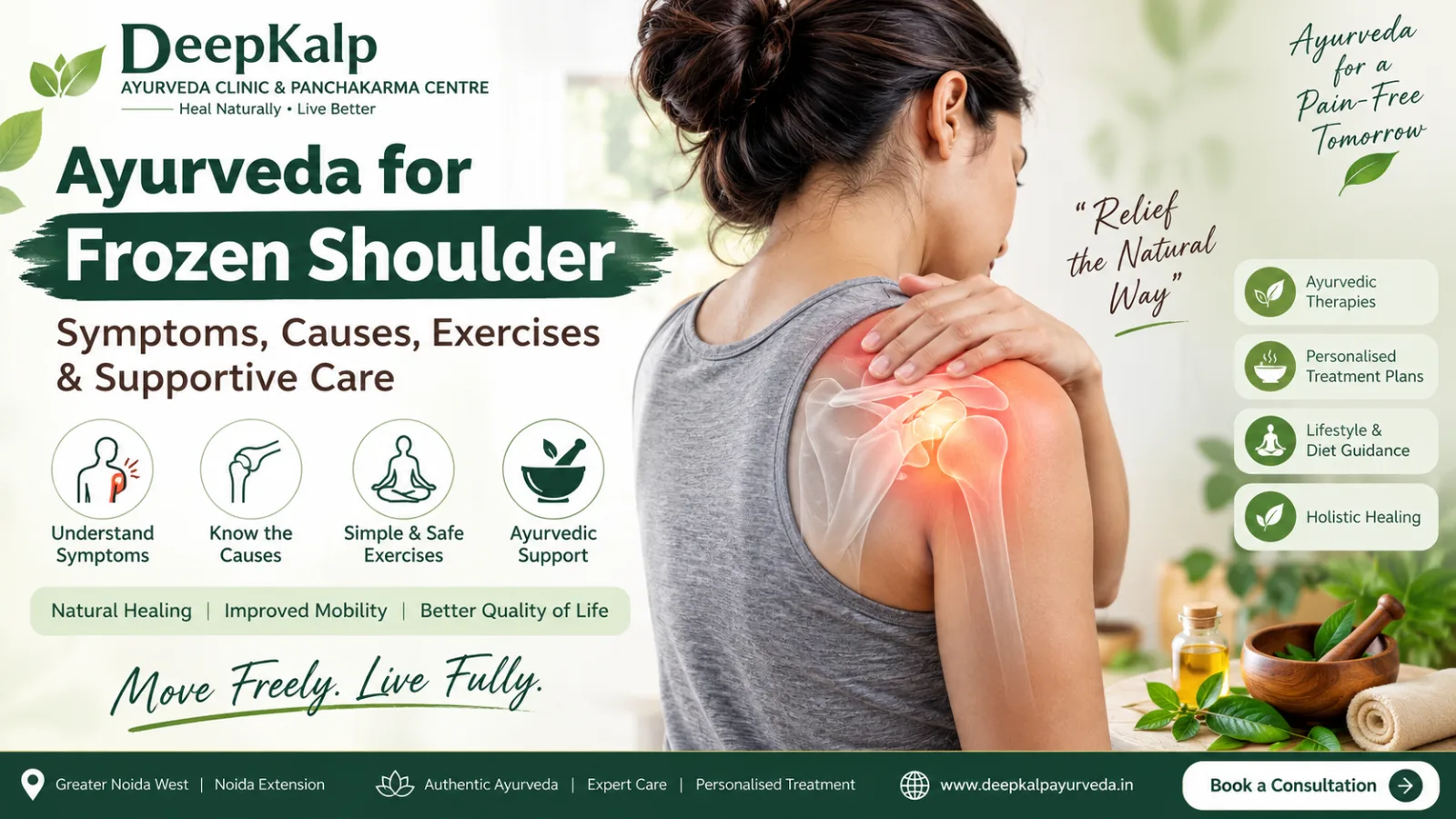
Ayurveda for Frozen Shoulder: Quick Answer
Frozen shoulder, medically called adhesive capsulitis, causes pain and progressive stiffness that can make everyday movements such as reaching overhead, dressing or reaching behind the back difficult. Ayurvedic care may be considered as complementary support for selected people, with treatment chosen after individual assessment. Persistent, severe or unexplained shoulder pain should receive appropriate medical evaluation.
What Is Frozen Shoulder?
Frozen shoulder occurs when the tissues around the shoulder joint become painful and stiff, restricting movement. Symptoms often develop gradually and may progress through stages of increasing pain and stiffness before movement slowly improves. The condition can sometimes occur after prolonged shoulder inactivity or an injury, and some health conditions are associated with a higher risk.
What Are the Common Symptoms?
- Shoulder pain that may be worse at night.
- Progressive stiffness and reduced range of motion.
- Difficulty lifting the arm or reaching overhead.
- Difficulty reaching behind the back or putting on clothes.
- Reduced ability to perform routine activities involving the affected arm.
Can Ayurveda Help With Frozen Shoulder?
Ayurveda traditionally takes an individualized approach to pain, stiffness, mobility, lifestyle and overall wellbeing. Depending on the assessment, supportive care may include selected oil-based therapies, localized treatments, gentle movement guidance, diet and daily-routine advice. These measures should not replace diagnosis or clinically indicated physiotherapy, orthopedic care or other medical treatment.
Ayurvedic Therapies That May Be Considered
A practitioner may consider therapies such as Abhyanga or localized Ayurvedic procedures when appropriate for the person's presentation. The exact oil, technique, duration and frequency should be selected professionally. A therapy that is suitable for one person may not be suitable for another.
Movement and Exercise: What Should You Keep in Mind?
Regular, comfortable movement is generally important for maintaining shoulder mobility. Gentle range-of-motion exercises may be recommended by a qualified healthcare professional or physiotherapist. Avoid forcing a painful movement, aggressive stretching or sudden heavy exercise, particularly during a painful phase.
Daily Habits That May Support Shoulder Wellness
- Avoid keeping the shoulder completely inactive for long periods unless specifically advised.
- Use comfortable posture during desk work and phone use.
- Increase activity gradually rather than suddenly.
- Prioritize sleep and recovery.
- Follow any physiotherapy or medical advice already provided.
When Should You See a Doctor?
Seek medical assessment for severe or rapidly worsening pain, significant injury, marked weakness, fever, unexplained swelling, chest-related symptoms, numbness that persists, or major loss of function. A clinician can determine whether the symptoms are actually due to frozen shoulder or another shoulder condition.
Frequently Asked Questions
What is the best Ayurvedic treatment for frozen shoulder?
There is no single best Ayurvedic treatment for everyone. An Ayurvedic practitioner should assess the person's symptoms, mobility, health history and treatment needs before selecting supportive therapies.
Can frozen shoulder get better on its own?
Frozen shoulder can improve over time, but recovery may be prolonged. Appropriate medical assessment and a suitable movement or rehabilitation plan can help guide care.
Can massage cure frozen shoulder?
Massage may provide supportive comfort for some people, but it should not be described as a guaranteed cure. Treatment should be individualized and coordinated with appropriate medical or rehabilitation care.
Should I exercise if my frozen shoulder hurts?
Gentle, appropriate movement may be useful, but forcing painful movements can aggravate symptoms. Exercise intensity and range should be guided by the stage of the condition and professional advice.
Is Ayurveda a replacement for physiotherapy?
No. Ayurveda may be considered complementary support. Physiotherapy or other medical care may be important depending on the diagnosis and severity.
Conclusion
Ayurveda for frozen shoulder focuses on individualized assessment, supportive therapies, healthy daily habits and appropriate movement. If you have persistent shoulder pain or stiffness, a professional evaluation can help identify the cause and determine a safe care plan.
DeepKalp Ayurveda Clinic & Panchkarma Centre in Greater Noida West provides personalized Ayurvedic consultation and traditional therapies. Consult a qualified practitioner before starting any therapeutic programme, particularly if you have an existing medical condition or significant shoulder symptoms.