
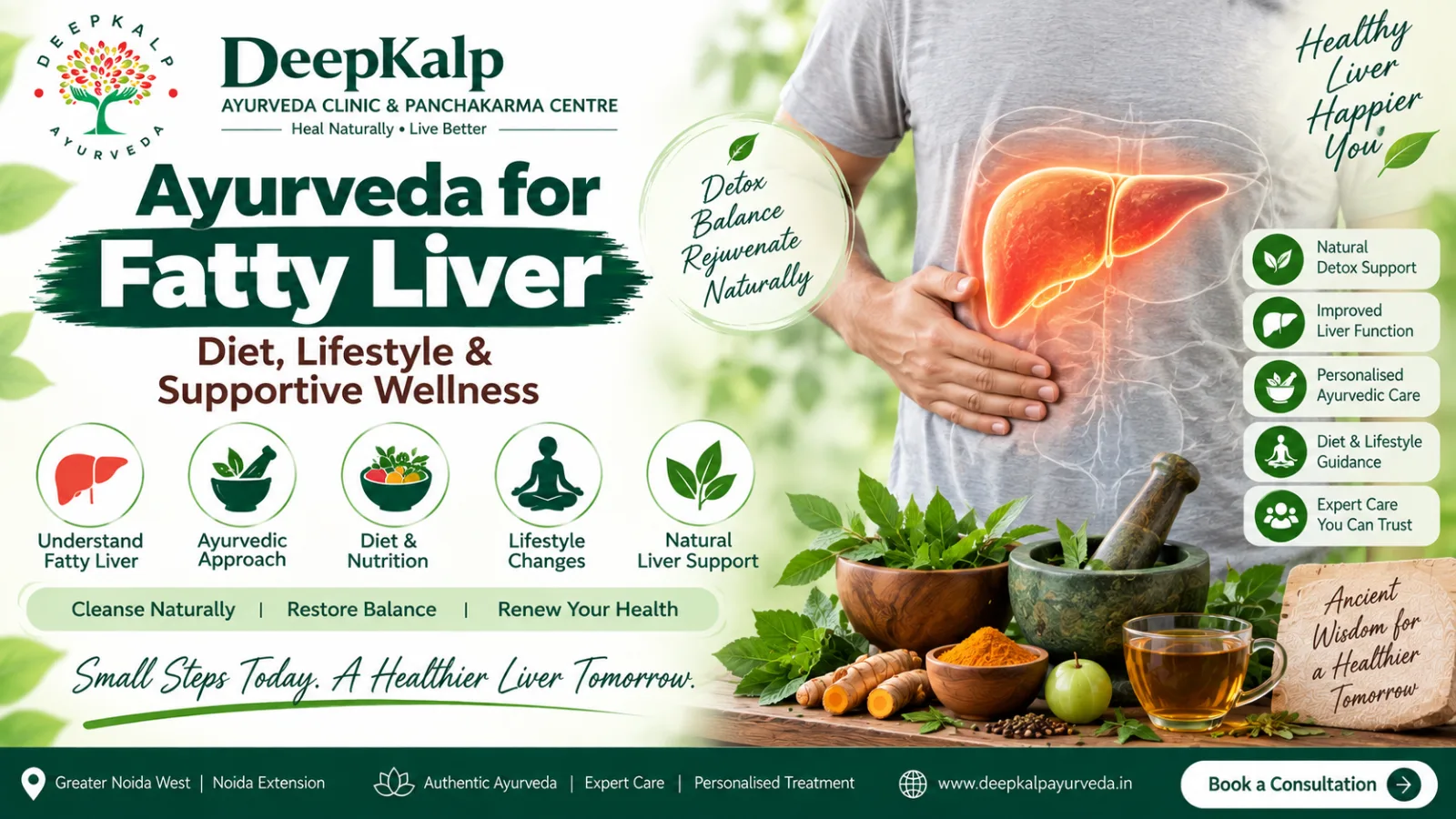
Fatty liver needs attention to everyday habits, not just symptoms. A practical approach includes a balanced diet, regular physical activity, healthy weight management when appropriate, limited alcohol, and medical assessment of the underlying cause. Ayurveda may be used as a complementary wellness approach, with individualized diet, daily-routine guidance and selected therapies under qualified supervision. It should not replace medical diagnosis, prescribed treatment or recommended liver monitoring.
What is fatty liver?
Fatty liver refers to excess fat accumulation in the liver. It can occur in people with metabolic risk factors such as overweight, insulin resistance or type 2 diabetes, although causes vary. Some people have no obvious symptoms and discover fatty liver during routine blood tests or imaging. Because liver conditions can have different causes and stages, proper medical evaluation is important.
Can Ayurveda help with fatty liver?
Ayurveda can provide supportive guidance around diet, digestion, daily routine, physical activity and individualized wellness care. The aim should be to improve sustainable health habits rather than promise a cure or claim that a particular herb or Panchkarma procedure can remove liver fat. Any Ayurvedic plan should be adapted to the person's medical history, medicines, laboratory results and overall condition.
Ayurvedic diet principles for liver wellness
Choose simple, minimally processed meals
Build meals around vegetables, pulses, appropriate whole grains, nuts or seeds in sensible portions, and adequate protein according to individual needs. Limit frequent intake of highly processed snacks, sugary drinks, sweets and foods high in unhealthy fats.
Watch added sugar and liquid calories
Sweetened beverages, packaged juices and frequent desserts can make healthy weight and metabolic management harder. Prefer water and unsweetened drinks for routine hydration.
Keep portions practical
Healthy food can still contribute excess calories when portions are consistently large. A regular meal pattern with mindful portions may be easier to maintain than extreme restriction.
Lifestyle habits that support liver health
- Move regularly: Walking, cycling, swimming or other suitable activity can contribute to metabolic health. Adults are generally advised to work toward at least 150 minutes of moderate physical activity per week, adjusted for individual ability.
- Break up long sitting periods: Add brief movement breaks during workdays.
- Prioritize sleep: Maintain a consistent sleep schedule and address persistent sleep problems.
- Manage stress: Breathing practices, yoga, meditation and enjoyable low-stress activities may help build a sustainable routine.
- Avoid tobacco: Tobacco use adds avoidable health risks.
- Alcohol: If you drink alcohol, discuss safe choices with your doctor; people with liver disease may be advised to avoid it.
Ayurvedic perspective and supportive therapies
Ayurvedic assessment may consider digestion, food habits, daily routine and individual constitution before suggesting a plan. Depending on the person's condition, a qualified practitioner may discuss diet and lifestyle measures and, where appropriate, supportive Ayurvedic therapies. Panchkarma should never be treated as a generic 'liver detox' or undertaken without professional assessment.
Herbal products also require caution. 'Natural' does not automatically mean safe, and some products can interact with medicines or affect the liver. Do not start concentrated herbal preparations or supplements for fatty liver without qualified medical guidance.
When should you see a doctor?
Fatty liver may be silent, so medical review is important even when you feel well. Seek prompt medical attention for yellowing of the skin or eyes, significant abdominal swelling, vomiting blood, black stools, severe or persistent abdominal pain, confusion, or other concerning symptoms. If fatty liver has been found on an ultrasound or blood test, discuss appropriate follow-up and testing with your healthcare professional.
Ayurveda for fatty liver in Greater Noida West & Noida Extension
For residents of Greater Noida West and Noida Extension, DeepKalp Ayurveda can provide personalized Ayurvedic consultation focused on practical diet, daily routine and supportive wellness planning. A responsible approach begins with understanding existing diagnoses, medicines and investigations and coordinating with necessary medical care rather than replacing it.
Simple daily checklist for liver-friendly habits
- Choose mostly home-style, minimally processed meals.
- Include vegetables and fibre-rich foods regularly.
- Limit sugary drinks, sweets and frequent fried or packaged foods.
- Walk or perform another suitable activity most days.
- Break up prolonged sitting.
- Maintain a consistent sleep routine.
- Take prescribed medicines as directed.
- Attend recommended liver and metabolic follow-ups.
Frequently Asked Questions
Can fatty liver be reversed naturally?
Fatty liver can improve in many people when the underlying causes and metabolic risk factors are addressed. Diet, physical activity and appropriate weight management are important, while the exact plan depends on the cause and severity. Medical follow-up remains important.
What should I eat if I have fatty liver?
Favor vegetables, pulses, whole or minimally processed grains, appropriate protein sources and unsaturated fats in sensible portions. Limit sugary drinks, excess added sugar and highly processed foods.
Is Panchkarma necessary for fatty liver?
No. Panchkarma is not automatically required for fatty liver and should not be promoted as a liver detox. If considered, it should follow an individualized assessment by a qualified practitioner and should complement, not replace, appropriate medical care.
Can Ayurvedic herbs cure fatty liver?
There is not enough basis to promise that a specific Ayurvedic herb will cure fatty liver. Herbal products can also have side effects or interactions. Discuss any supplement with a qualified healthcare professional before use.
Is walking useful for fatty liver?
Regular physical activity supports metabolic health and can be part of a fatty-liver lifestyle plan. Start at a level appropriate for your fitness and health status and increase gradually.
Medical Disclaimer
This article is for educational and wellness information only. Fatty liver has multiple possible causes and may require medical testing, monitoring and treatment. Ayurvedic care should be individualized and used as complementary support, not as a substitute for diagnosis, prescribed medicines or necessary specialist care. Consult a qualified medical professional and an appropriately trained Ayurvedic practitioner for personal advice.
Related DeepKalp topics: Readers may also explore DeepKalp's existing resources on Ayurveda for Diabetes, Weight Management, Digestive Wellness, Panchkarma precautions and the first Ayurvedic consultation.